

Marquee Installation: What to Expect Before Your Event
Hiring a marquee is an exciting part of planning a wedding, party or corporate event. But if you’ve never hired one before, you might be wondering what happens when it’s time to put everything together.
How long does marquee installation take? Does the garden need to be prepared? When can the caterers and decorators arrive? And what happens when the event is over?
Understanding the installation process can help you plan your event with confidence and avoid unnecessary last-minute complications.
At County Marquees East Anglia, we provide marquee hire across Essex, Suffolk and Norfolk, helping customers create event spaces in gardens, private grounds and venues throughout the region.
In this guide, we’ll explain the main stages of a typical marquee installation, what to prepare beforehand and the questions worth asking your marquee hire company.

What Does Marquee Installation Involve?
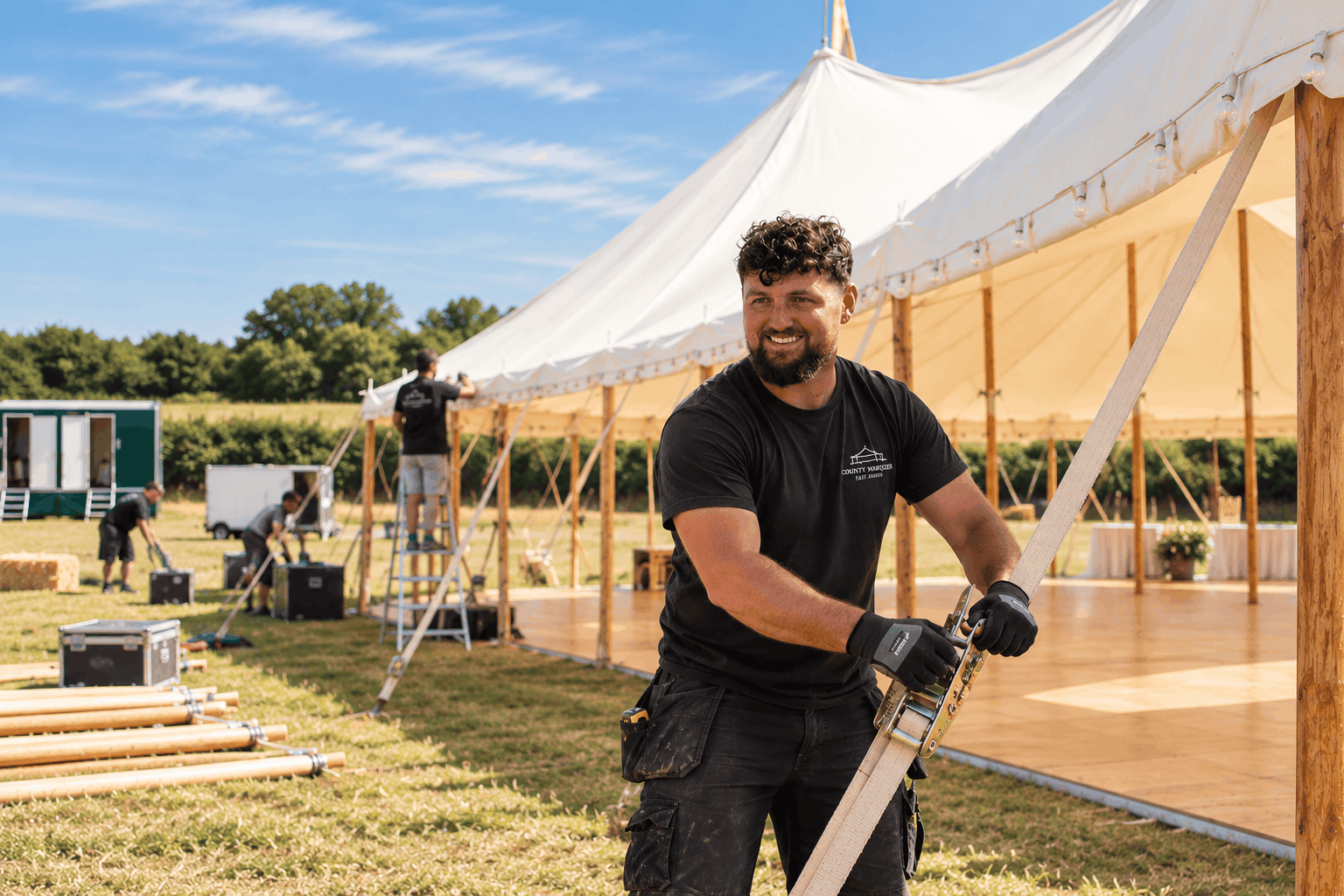
Marquee installation is much more than simply putting up a tent. Depending on the structure and event requirements, it can involve preparing the site, erecting the framework, securing the marquee, fitting flooring and installing additional equipment.
Every event is different. A small garden party marquee will have different installation requirements from a large wedding marquee with a dining area, dance floor and catering facilities.
A typical professional marquee installation involves several stages:
1. Checking the site and confirming the layout.
2. Preparing access and the installation area.
3. Delivering and positioning the marquee equipment.
4. Erecting and securing the structure.
5. Installing flooring and agreed interior equipment.
6. Carrying out final checks before the marquee is handed over.
7. Dismantling and removing the equipment after the event.
The exact sequence will depend on the marquee style, ground conditions, equipment and arrangements agreed with your supplier. However, we often aim to have the installation completed within the same day, weather permitting.
1. Site Visits and Planning Before Installation
One of the most important parts of marquee installation happens before any equipment arrives.
A site visit allows the marquee company to assess whether the proposed location is suitable and identify anything that could affect installation.
What Will a Marquee Company Look For?
Common considerations include:
- Available space: There must be enough room for the marquee and any necessary clearance around it.
- Ground conditions: The surface needs to be suitable for the chosen structure and anchoring method.
- Vehicle access: Delivery vehicles and installation teams need a practical route to the site.
- Slopes and uneven ground: These can affect the marquee layout and flooring requirements.
- Overhead obstacles: Trees, branches and overhead cables may restrict where a marquee can be positioned.
- Drainage: Areas prone to standing water may require additional consideration.
- Nearby buildings: The position of houses, fences and outbuildings can affect access and layout.
This is particularly important for events in private gardens, rural properties and countryside locations across Essex, Suffolk and Norfolk.
County Marquees East Anglia offers free, no-obligation site visits to help assess potential locations and discuss the requirements of your event.
Choosing the Right Marquee for Your Site
Not every marquee is suitable for every surface.
For example, a traditional pole marquee has different installation requirements from a clearspan structure. The size of the site, ground surface and available access can all influence the options.
If you’re still deciding on a structure, explore our marquee hire options or speak to the team about which style may suit your location.
2. Preparing Your Garden or Venue for Marquee Installation
Once the location and layout have been agreed, there are a few practical things you can do to help the installation go smoothly.
Clear the Installation Area
Before the team arrives, make sure the agreed installation space is accessible.
Depending on your site, this might mean moving garden furniture, children’s play equipment, plant pots or other temporary obstacles.
It’s also worth checking that gates and access routes are clear.
If there are underground services, irrigation systems or other hidden features in the proposed installation area, make sure the marquee company knows about them before work begins.
Consider Vehicle and Supplier Access
Marquee equipment can be bulky, so access is an important consideration.
Think about whether delivery vehicles can reach the property, where unloading can take place and whether other suppliers will need access at the same time.
For rural venues, fields and gardens with narrow entrances, discussing access arrangements early can help avoid delays.
Check the Ground Conditions
Grass, gravel, patios and other surfaces may all present different installation requirements.
If your event follows a period of heavy rain, the ground may be softer than expected. This can affect vehicle access, flooring and the suitability of the proposed installation area.
Avoid making changes to the ground or arranging temporary surfaces without discussing them with your marquee company first.
3. Delivery and Erection of the Marquee
When installation day arrives, the team will need to unload the equipment and prepare the structure in the agreed position.
The exact erection process depends on the marquee design.
Some marquees use traditional poles and guy ropes, while others have an engineered frame that creates a large open interior without central support poles.
Professional installation teams follow the requirements of the particular structure and assess the conditions on site.
How Is a Marquee Secured?
Marquees need to be properly anchored to withstand the conditions for which they are designed.
The appropriate anchoring method depends on the structure, surface, site conditions and manufacturer’s requirements.
On some sites, ground stakes may be suitable. Other locations may require an alternative engineered anchoring arrangement.
This is one reason why site suitability should be confirmed before the event rather than leaving installation decisions until the day.
4. Installing Marquee Flooring, Lighting and Interior Equipment
Once the main structure is in place, attention turns to making the interior suitable for the event.
Depending on what has been booked, this may involve flooring, lighting, heating, furniture, linings, staging or a dance floor.
Flooring and Ground Preparation
Flooring can make a significant difference to how comfortable and practical a marquee feels.
A relatively level lawn may have different requirements from soft or uneven ground, particularly during autumn and winter.
Options can include matting, carpet and wooden subflooring, depending on the site and intended use.
You can explore the available products in our marquee flooring range.
Lighting and Heating
Lighting helps make the marquee functional and welcoming, particularly for evening events.
Heating may also be important for weddings, parties and corporate occasions taking place during colder months.
Both should be discussed before installation so that equipment requirements, power arrangements and positioning can be planned appropriately.
Furniture, Dance Floors and Other Equipment
Tables, chairs, bars and dance floors all affect the way people move around the marquee.
It’s worth finalising the layout before installation, especially if you’re planning a seated meal followed by dancing or entertainment.
You can find more information about the available extras on our additional marquee equipment page.
5. How Long Does Marquee Installation Take?
One of the most common questions is how much time to allow for marquee installation.
There isn’t one answer that applies to every event.
Installation time can vary depending on:
- The size and style of the marquee.
- Access to the site.
- Ground conditions.
- The type of flooring required.
- Lighting, heating and interior equipment.
- The complexity of the event layout.
- Weather conditions during installation.
A smaller, straightforward setup may require considerably less time than a large wedding or corporate marquee with multiple additional features.
Rather than relying on a general estimate, ask your marquee supplier to confirm the expected installation schedule for your particular booking. However, as previously mentioned, we always aim to have the marquee installed and fitted within the same day.
Should You Allow Extra Time Before the Event?
Where possible, it’s sensible to build some flexibility into your event schedule.
This gives other suppliers time to prepare their areas and allows for final arrangements before guests arrive.
For a wedding, for example, you may need to coordinate with caterers, florists, furniture suppliers, entertainers and decorators.
Confirm when each supplier can safely access the marquee, rather than assuming everyone can begin setting up as soon as the structure is standing.
6. What Happens After the Marquee Has Been Installed?
Once installation is complete, the marquee should be checked before being handed over for use.
The checks required will depend on the structure, equipment and site conditions.
You should also know who to contact if you have any concerns before or during the event. At County Marquees East Anglia, we are available at any time should you need to contact us while the marquee is erect.
Coordinating Your Other Suppliers
Good communication is particularly important when several businesses are involved in preparing the event.
For example:
- Caterers may need access to prepare food service areas.
- Florists and decorators may need time to dress tables and entrances.
- Entertainment suppliers may need to position equipment and arrange power.
- Furniture suppliers may need access to the agreed layout.
Make sure everyone understands the installation timetable and any restrictions on access.
If you’re planning a wedding, our marquee wedding planning guide covers more of the practical decisions involved in bringing the whole event together.
7. Marquee Dismantling and Removal After Your Event
Marquee hire doesn’t end when the last guest leaves.
The structure and hired equipment will need to be dismantled and removed from the site.
The removal arrangements should be agreed with your supplier in advance, particularly if the event is taking place at a venue with restricted access or a specific hire period.
What Should You Do Before Dismantling?
Check which items need to be removed by other suppliers before the marquee company returns.
For example, caterers, decorators and entertainment providers may need to collect their equipment before dismantling can begin.
Personal belongings, decorations and any items not supplied by the marquee company should also be cleared according to the agreed arrangements.
It’s worth confirming whether the venue has any requirements concerning vehicle access, ground protection or the condition in which the site must be left. The dismantling of a marquee will nearly always be completed within one day, often within half a day.
Marquee Installation in Essex, Suffolk and Norfolk
If you’re planning to hire a marquee in Essex, choosing a suitable location is only the beginning.
The installation needs to work around the practical requirements of your event, whether that’s a wedding reception in a family garden, a birthday celebration at a country property or a corporate gathering at business premises.
The same considerations apply across Suffolk and Norfolk, where rural venues and private grounds can offer wonderful settings but may require additional thought around access, ground conditions and facilities.
County Marquees East Anglia provides marquee hire across the region, with site visits available to help customers understand what may be possible at their chosen location.
If you’re exploring marquee hire in Essex and the wider East Anglia area, discussing installation requirements early is a useful way to plan with greater confidence.
Frequently Asked Questions About Marquee Installation
How long does it take to install a marquee?
It depends on the marquee size, style, ground conditions and additional equipment, but expect anywhere from a few hours to several hours.
Your marquee supplier should be able to provide an expected installation schedule once the requirements of your event have been confirmed.
Does my garden need to be completely flat?
Not necessarily, but the suitability of uneven ground depends on the marquee structure and the extent of the slope. A site assessment can help determine whether installation is practical and whether additional preparation or flooring is required.
Can a marquee be installed on a patio or concrete?
Some marquee structures can be installed on hard surfaces, subject to suitable space, access and anchoring arrangements. The marquee company should confirm whether your chosen structure is appropriate for the location.
What happens if it rains during marquee installation?
Rain does not automatically prevent installation, but heavy rain, strong winds or unsafe ground conditions may affect the work. The installation team should assess the conditions and decide whether it is safe to proceed.
Do I need to be present during marquee installation?
This depends on the arrangements made with your supplier. Someone may need to provide access or confirm practical details, so it’s worth agreeing who will be available beforehand.
When will the marquee be taken down after my event?
Dismantling arrangements depend on the booking and site availability. Confirm the removal schedule in advance, particularly if other suppliers need to collect equipment or the venue has a fixed departure deadline.
Key Takeaways
- Marquee installation begins with planning and assessing the site.
- Ground conditions, access and available space can influence the structure and installation requirements.
- Flooring, lighting, heating and other equipment need to be considered alongside the marquee itself.
- Installation times vary, so it’s important to agree a schedule rather than assume a fixed timeframe.
- Coordinating caterers, decorators and other suppliers can help the event preparation run more smoothly.
- Dismantling and removal should be planned before the event takes place.
Planning a Marquee Event? We’re Happy to Help
Whether you’re organising a wedding, private party or corporate event, understanding the installation process is a useful first step towards creating a comfortable and practical event space.
At County Marquees East Anglia, we provide marquee hire across Essex, Suffolk and Norfolk, helping customers explore suitable structures and equipment for their chosen location.
If you’d like advice about your site, marquee options or installation requirements, get in touch with our team. We’d be happy to discuss your plans and arrange a site visit.